Article created by-Callesen Eaton
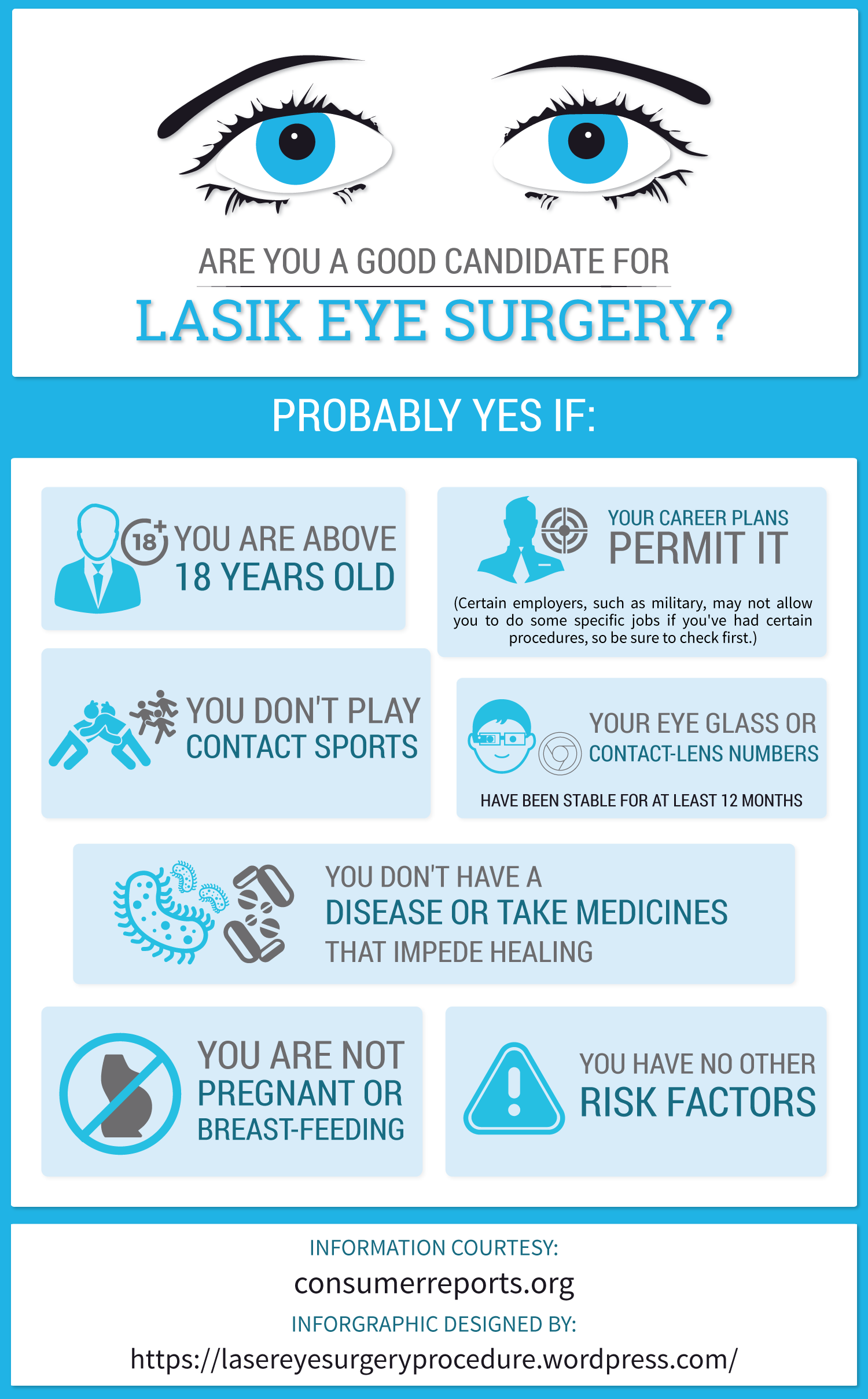
LASIK is by far one of the most preferred laser vision improvement treatment, yet not every person is a candidate for it. It's likewise not the most effective choice for every single eye condition, particularly for older patients who may create age-related vision problems such as presbyopia.
If you are not a candidate for LASIK, there are several other options readily available to assist you achieve your visual objectives. These consist of LASEK, SMILE, PRK and Refractive Lens Exchange Surgical Treatment.
LASEK
LASEK, or laser-assisted subepithelial keratectomy, is a secure option to LASIK that can be used for people with thin corneas. It's likewise an option for people with higher prescriptions, considerably completely dry eyes or a pre-existing clinical condition that makes them inappropriate for LASIK.
During PRK, your doctor will certainly remove the epithelium before improving your cornea with a laser. simply click the following internet page 's a less invasive treatment than LASIK since no flap is created.
Your doctor will certainly after that use a 'bandage' to your eye to shield it while the epithelium heals. This normally takes a few weeks to finish, as well as your vision will improve as the surface area of your eye heals.
Nevertheless, you may experience pain, sensitivity to light and also blurred vision for a few days after your LASEK treatment. This can be managed with medicines and also antibiotic and also steroid drops.
SMILE
SMILE is a less invasive variation of laser refractive surgery that is accepted to deal with nearsightedness (myopia) and sometimes astigmatism. SMILE utilizes the same excimer laser that LASIK does, however it doesn't require reducing a flap in your cornea.
This makes the procedure easier on your eyes, since it includes less tissue damages. It also allows your eye doctor to create a tiny cut that is only 2 to 3 mm.
Both SMILE and LASIK fast outpatient surgical treatments that can enhance your vision and also lower or eliminate your requirement for eyeglasses or call lenses. Both treatments are secure, and also have high success prices in clinical research studies.
Picking the right alternative is vital to your visual health and general happiness. Your eye doctor can help you choose which refractive surgical procedure is best for your eyes and way of living.
RLE
LASIK is a popular procedure, but not everybody is an excellent prospect for it. This is where a variety of lasik choices enter play.
RLE, or refractive lens exchange, is an alternate to LASIK for individuals who have presbyopia and also farsightedness (hyperopia). Many Patients includes the elimination of the natural lens of your eye as well as changing it with an artificial intraocular lens.
The surgery fasts, minimally invasive, as well as frequently takes less than half an hour per eye. The recuperation duration is reasonably brief, as well as many clients are able to resume normal tasks within a couple of days.
Similar to all surgeries, RLE is connected with some threats. Nonetheless, they are not as significant as those of LASIK.
ICL
ICL is a non-laser procedure utilized in individuals that are not candidates for LASIK. They might have thin corneas, poor sight, or completely dry eye problems.
ICL can be a wonderful option for these people. It is less invasive than LASIK and can be put in the front of your eye to remedy nearsightedness or astigmatism.
It is a biocompatible lens that does not trigger rejection by your body. It is additionally really easy to use since it does not require disinfecting, cleansing or elimination daily.
The dental implant is made from a product called collamer, which is purified collagen. It is soft and flexible, however does not transform form or aggravate the eye at all.
https://writeablog.net/napoleon925signe/below-are-some-dangers-as-well-as-difficulties-that-may-happen-after-cataract can last indefinitely, yet clients have to participate in annual check-ups to ensure their ICL is sized as well as in position effectively. Oversized or badly placed ICLs can boost eye pressure as well as lead to glaucoma, which can affect vision.